Post Preview
Key Takeaways
- Small cracks, dead limbs, root damage, and new leaning can become more serious during heavy wind and rain.
- A safe inspection begins from the ground, without climbing, chainsaws, or working near electrical lines.
- Proper pruning is selective and purposeful. It is not the same as removing large amounts of healthy growth.
- Large trees near people, buildings, vehicles, or utilities deserve prompt professional attention when warning signs appear.
- Early planning gives property owners more time to make decisions before emergency conditions limit options.
Orlando’s long growing season can leave yards full of mature shade trees, palms, oaks, and fast-growing ornamentals. That greenery adds comfort and character, but it also deserves attention during thunderstorms, saturated ground, and tropical weather. The Atlantic hurricane season runs from June 1 through November 30, so tree planning should be part of an ongoing property-safety routine, not a last-minute response to a forecast.
When a tree stands near a roof, driveway, play area, sidewalk, or utility line, a ground-level review is a sensible first step. Property owners who want a closer look can consider tree risk assessment Orlando services from Tree Work Now. Its Orlando arborist assessment service focuses on tree health, roots, canopy condition, structural concerns, and potential falling-tree or branch hazards. With certified arborists serving Orlando and Central Florida, Tree Work Now can help homeowners and property managers turn visible concerns into practical next steps.
Why Storm Preparation Starts Before the Forecast
Wind exerts force on branches and canopies, while prolonged rain can soften the soil around roots. A tree may look green and vigorous from the street, yet still have a weak branch connection, decayed wood, or damaged roots that are not obvious at a glance. For example, a mature tree beside a garage may appear stable until high winds expose a long, heavy limb extending over the roofline.
Waiting for a named storm or severe-weather warning can make tree decisions harder. Crews may be booked, debris disposal becomes more difficult, and rushed cutting can create unnecessary hazards. Preparing earlier also means loose patio items, planters, and yard equipment can be handled separately from tree care. Preparing before hurricane season supports a more organized approach to protecting people, property, and outdoor spaces.
A Simple Walk-Around Tree Check
Set aside time to view each important tree from several angles. Stay on the ground and keep clear of hanging branches, unstable-looking trunks, and utility lines. Do not climb a tree, use a ladder for cutting, or attempt work close to live electrical equipment.
- Walk around the entire tree instead of inspecting only the side facing the street.
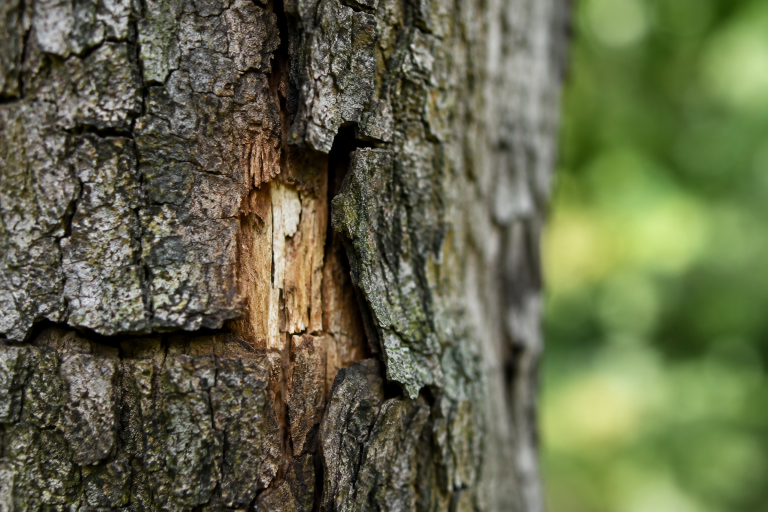
- Look at the trunk for cracks, cavities, missing bark, swelling, seams, or areas that appear hollow.
- Check major limbs for dead wood, broken ends, rubbing branches, and limbs that extend far beyond the rest of the canopy.
- Look near the trunk for exposed, lifted, cut, or damaged roots and changes in the surrounding soil.
- Study the canopy for dead sections, uneven weight, or branches approaching a home, fence, driveway, or sidewalk.
- Make notes and take photos from a safe distance so future changes are easier to identify.
Warning Signs That Deserve Attention
- New leaning: A recent shift in angle, especially in disturbed soil or with lifted roots, may indicate a stability concern.
- Large cracks: Cracks in a trunk or major limb can indicate a weakness that needs closer evaluation.
- Dead or hanging branches: Dry, detached, or broken limbs may fall during gusts or ordinary thunderstorms.
- Decay indicators: Cavities, soft wood, fungal growth, or hollow-looking sections may warrant a professional review.
- Root damage: Trenching, construction, vehicle traffic, lawn equipment, and erosion can affect a tree’s anchoring roots.
- Split trunks: Multiple stems with a narrow connection may need assessment, particularly when they support a broad canopy.
How Canopy Shape Affects Storm Performance
A balanced canopy can reduce uneven loading across a tree. Good pruning focuses on selected dead, damaged, poorly attached, or overextended branches while preserving the tree’s overall structure. Topping, or cutting major limbs back to stubs, is different. It can encourage weak regrowth and may leave a tree with new maintenance problems.
Pruning decisions should reflect the species, age, condition, and location of the tree. Current UF/IFAS storm-ready landscape guidance emphasizes advanced trimming, removal of cracked or broken limbs, and avoiding indiscriminate stub cuts. In Orlando, that means looking beyond a quick cosmetic trim and considering whether branches have enough clearance from roofs, walkways, and vehicles.
When a Homeowner Check Is Not Enough
A walk-around can reveal visible defects, but it cannot confirm internal decay or fully explain complex root problems. Request a qualified inspection when a large tree could reach an occupied building, when several warning signs appear together, or after lightning, flooding, construction damage, vehicle impact, or sudden leaning.
A capable tree-care professional should explain what was observed, what options are available, and how urgent the work may be. Preservation, selective pruning, monitoring, and removal are different outcomes. The right choice depends on the tree’s condition and what could be affected if it fails.
Questions To Ask Before Hiring Tree Care Help
- Who will inspect the tree, and what training or credentials do they have as an arborist?
- Will the findings distinguish urgent hazards from routine maintenance?
- Can the company explain why each recommendation is being made?
- Will preservation options be discussed when removal is not the only reasonable choice?
- How will workers protect nearby roofs, fences, landscaping, people, and pets?
- Can the company provide insurance and licensing information upon request?
Storm-Season Tree Preparation Checklist
- Inspect trees from the ground and document visible concerns with photos.
- Move vehicles away from trees with obvious defects when possible.
- Remove loose objects from beneath large limbs and secure outdoor items.
- Do not cut branches near power lines without qualified assistance.
- Keep contact information for a trusted tree-care provider and utility company.
- Review evacuation plans and emergency supplies separately from landscape maintenance.
What To Do After a Major Storm
Stay away from hanging limbs, split trunks, uprooted trees, and any tree touching a wire. Treat downed wires as energized and contact the utility provider before arranging work nearby. Photograph tree damage from a safe location, then seek an inspection if a tree has shifted, lost major limbs, or shows root disturbance.
Common Questions From Orlando Property Owners
How Often Should Trees Be Checked?
A seasonal ground check is useful, with extra attention after severe weather, lightning, flooding, construction activity, or a noticeable change in a tree’s appearance.
Can a Healthy Tree Still Fail During a Storm?
Yes. No tree is completely storm-proof. An assessment can identify conditions that may increase risk, but it cannot guarantee a tree will withstand every storm.
Should Every Leaning Tree Be Removed?
No. Some trees naturally grow at an angle. A new lean, soil movement, exposed roots, cracking, or a nearby target makes the situation more concerning.
Is Storm Pruning the Same as Regular Pruning?
No. Proper pruning addresses selected defects and supports the structure. Rushed or severe cutting can stress a tree and create weak regrowth.
Conclusion
Visit this website: A Clearer, Cleaner Future: The Growing Importance of Commercial Cleaning in Orlando
Orlando property owners do not need to diagnose every tree problem on their own. A careful visual check can reveal obvious concerns, while a qualified arborist can evaluate conditions that are harder to see. By acting early, avoiding risky do-it-yourself work, and responding carefully after severe weather, homeowners can make more informed choices for their trees and their Florida properties.